

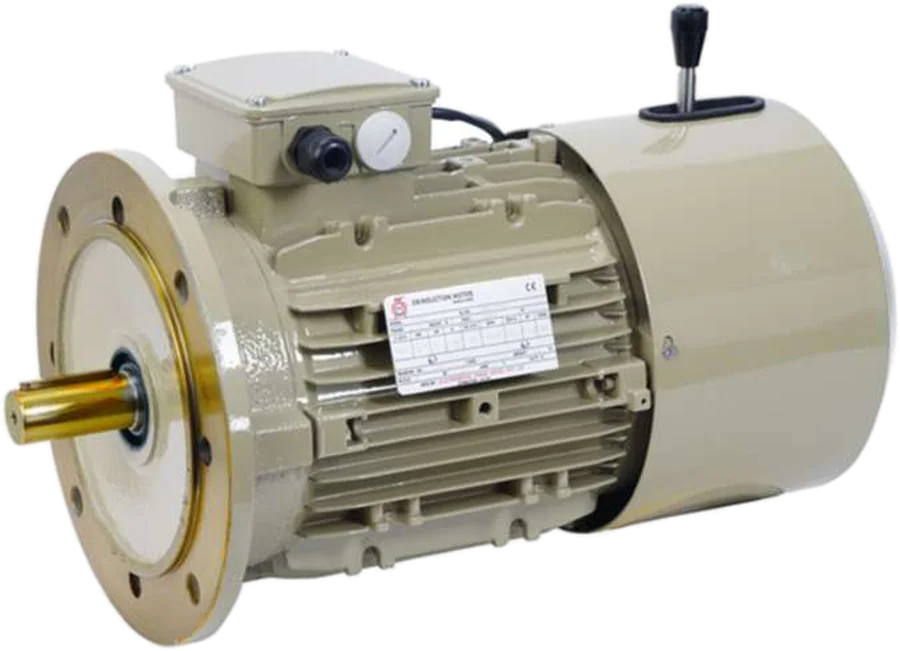
For hoists, the brake torque is usually chosen at about 200 % of motor torque. That holds the load with a good safety factor, including the 125 % test load. But torque does not tell you whether the brake will survive the duty.
The energy check
On each stop the brake converts kinetic energy into heat. When lowering, it must also absorb the work of the descending load during the stopping time. The permitted energy per stop falls steeply as stops per hour rise, because the disc has less time to cool.
EMPD datasheets give the permitted energy per stop for every brake size from 1 to 1,000 stops an hour. Compare your calculated energy, with an allowance for brake response, against the value at your stop rate.
Three practical rules
- Switch DC brakes on the DC side for hoists: AC-side switching lengthens the engagement time about six-fold.
- On inverter drives, feed the brake separately.
- Use winding thermistors for frequent starting.
The full calculation for a 5-tonne hoist: sizing the motor, the brake and its heat. Or use the brake sizing tool.