

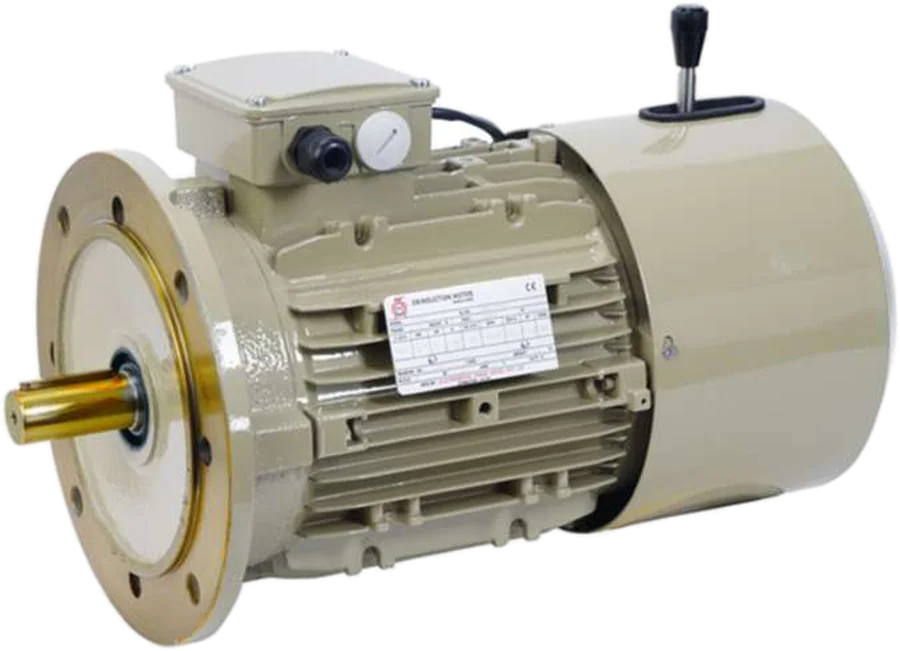
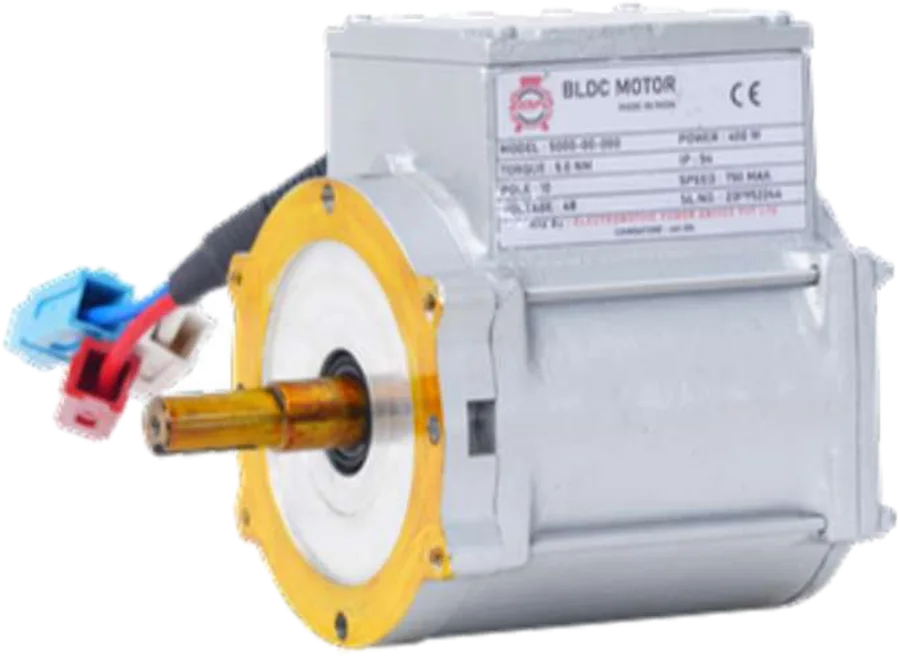
EMPD brake motors carry a spring-applied, fail-safe brake: springs clamp the friction disc whenever the coil is not energised, so the load is held if the power fails. Three choices decide whether it suits the machine.
1. DC or AC brake coil
A DC brake is fed through a rectifier in the terminal box. It runs quietly and is the usual choice for conveyors, machine tools and most hoists. Switching the rectifier on its DC side makes it engage faster when the stopping distance matters.
An AC brake runs straight from the three-phase supply. It releases and engages very quickly, which suits high cycle rates, at the cost of more noise.
2. Brake torque
Brake torque is chosen as a multiple of the motor's rated torque: about 100 % for stopping horizontal loads, rising to about 200 % for hoists so the load is held with margin, including the overload test. EMPD fits brakes from 0.8 to 160 Nm, sized at 100 to 250 % of motor torque.
3. Heat and duty
Every stop turns the load's kinetic energy into heat in the friction disc. A brake that holds the load can still overheat if it stops too often. For frequent starts, specify the S4 duty and the starts per hour, so that both motor and brake are checked thermally. Our hoist brake application study works through a full example.
Worth asking for
- Manual release lever, to lower a load safely during maintenance
- Thermistors in the winding for frequent-start duty
- IP55 or better for outdoor cranes
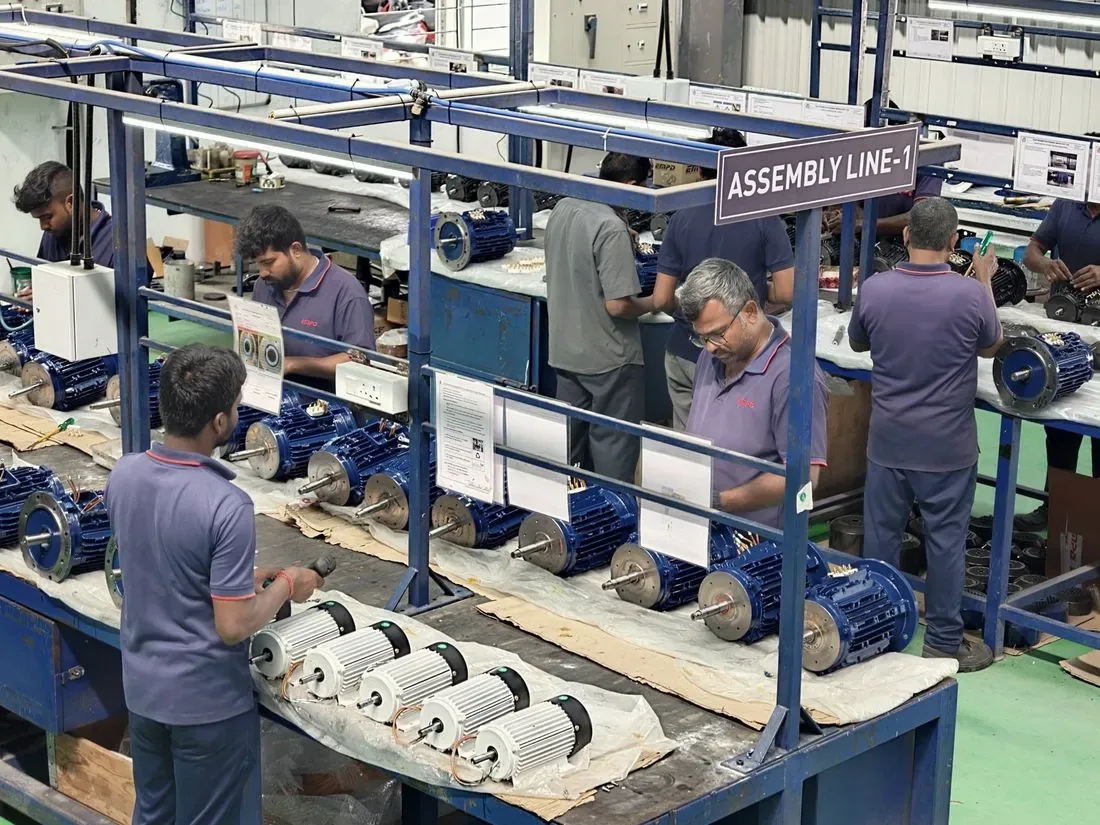
Every EMPD brake motor is tested with its brake: air gap set with a go / no-go gauge, and torque checked before and after ten on / off cycles. See brake motors or the brake sizing tool.