

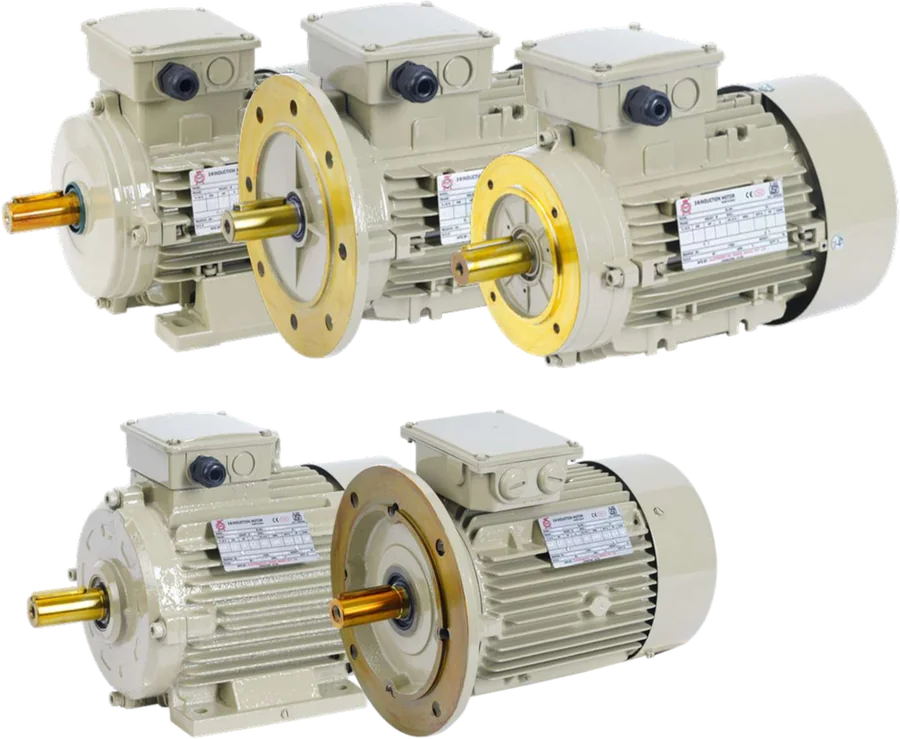
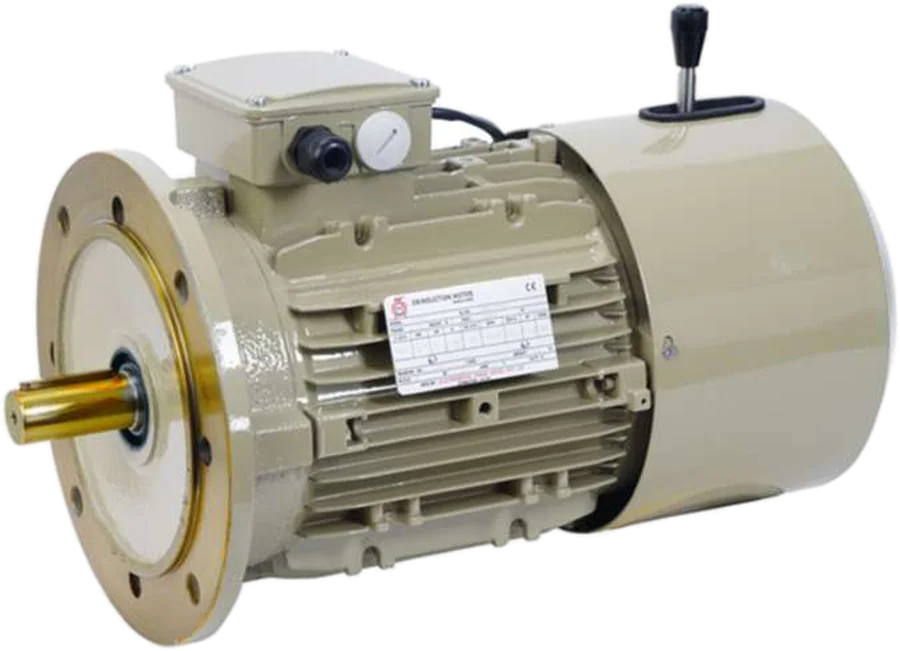
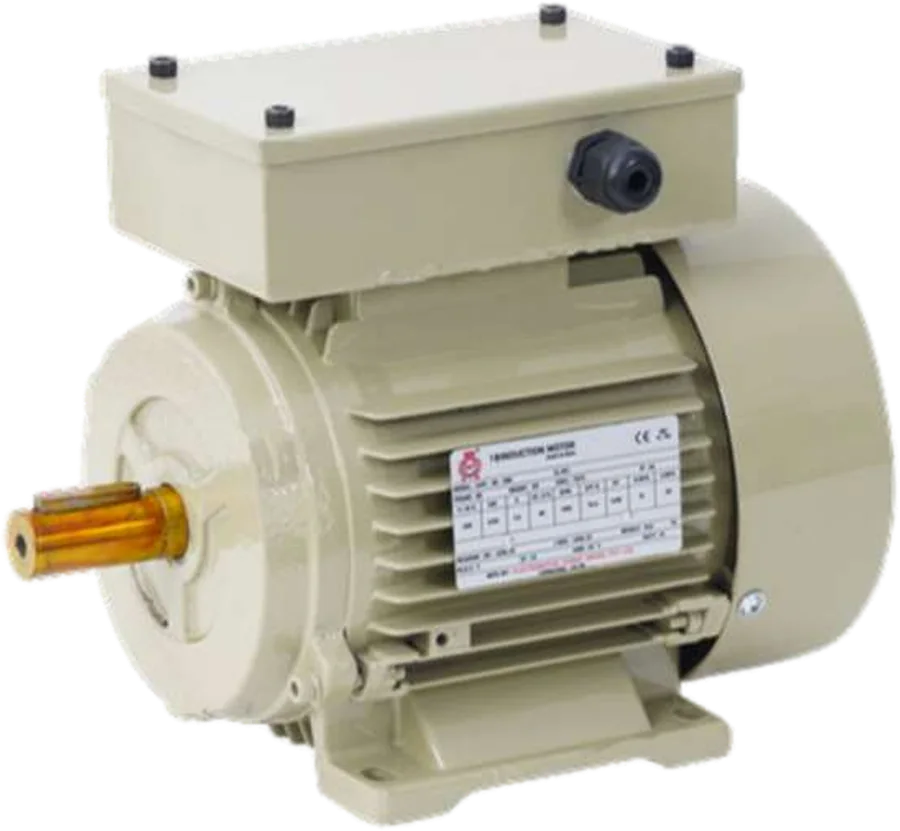
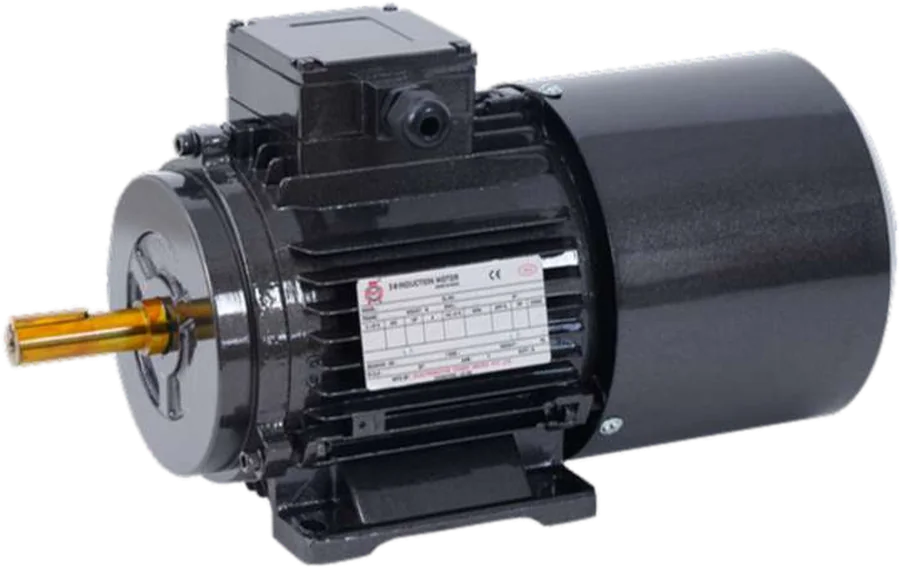
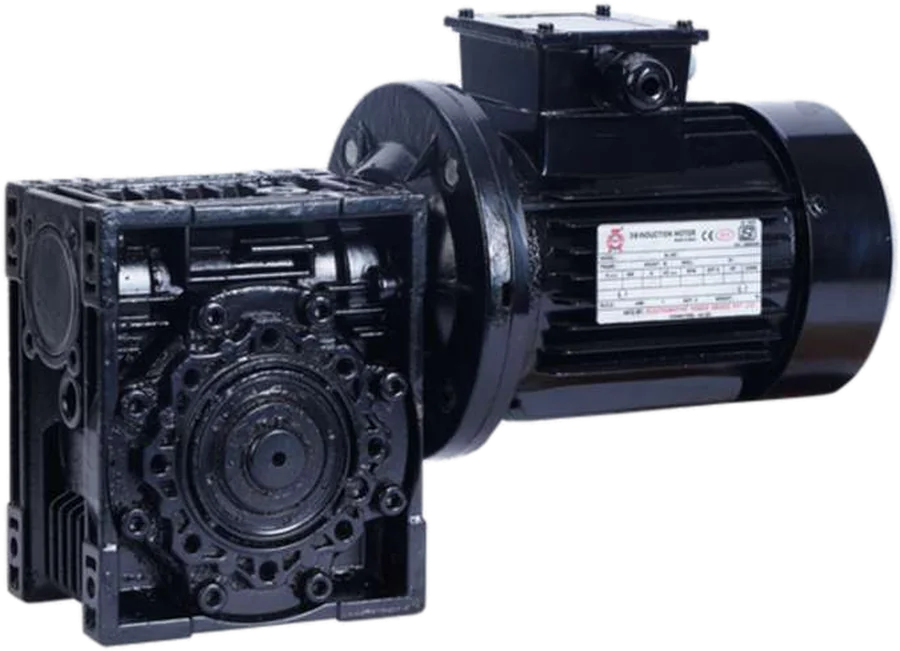
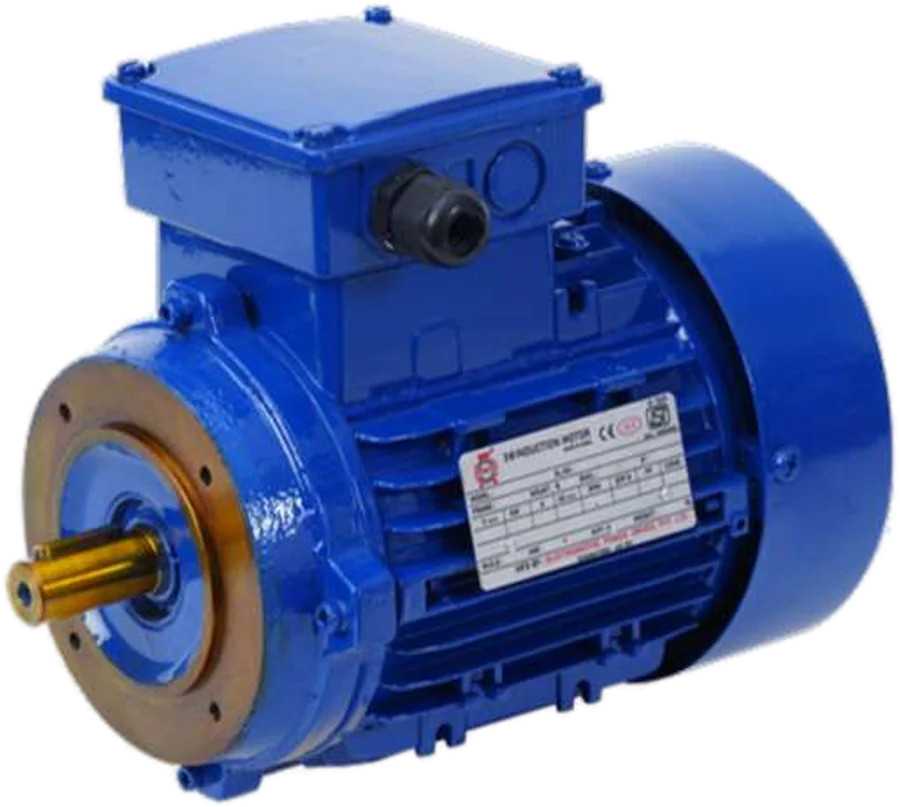
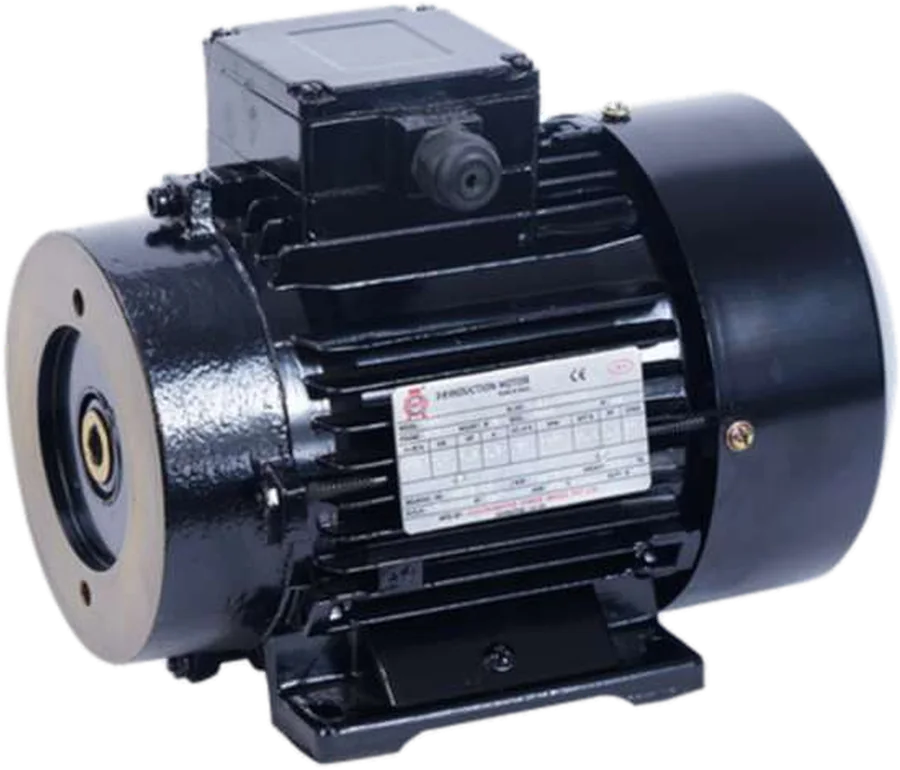
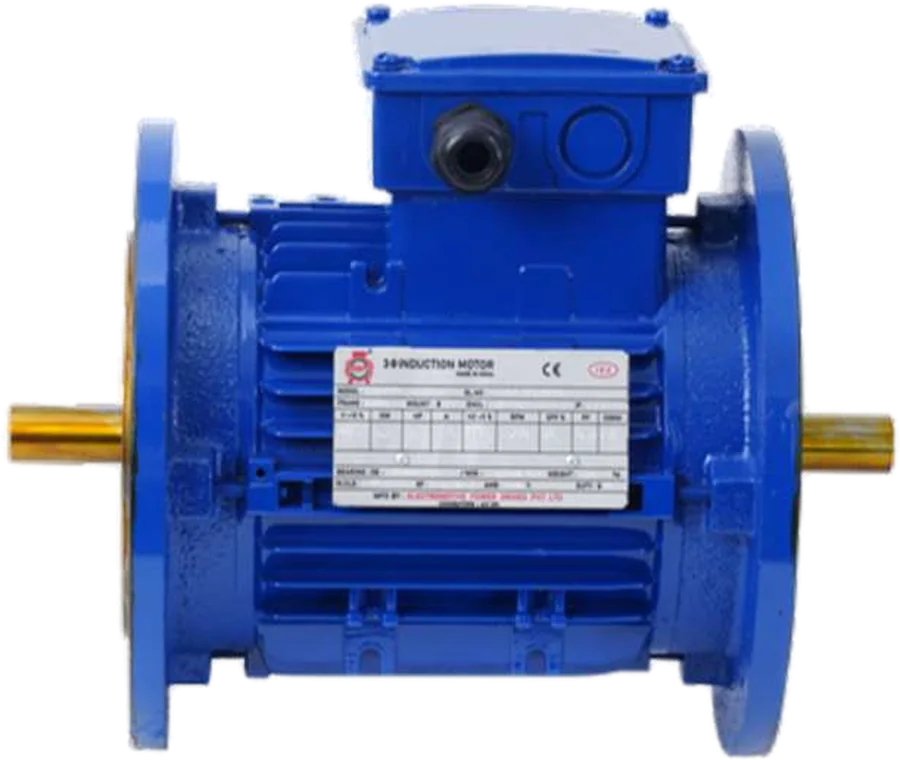
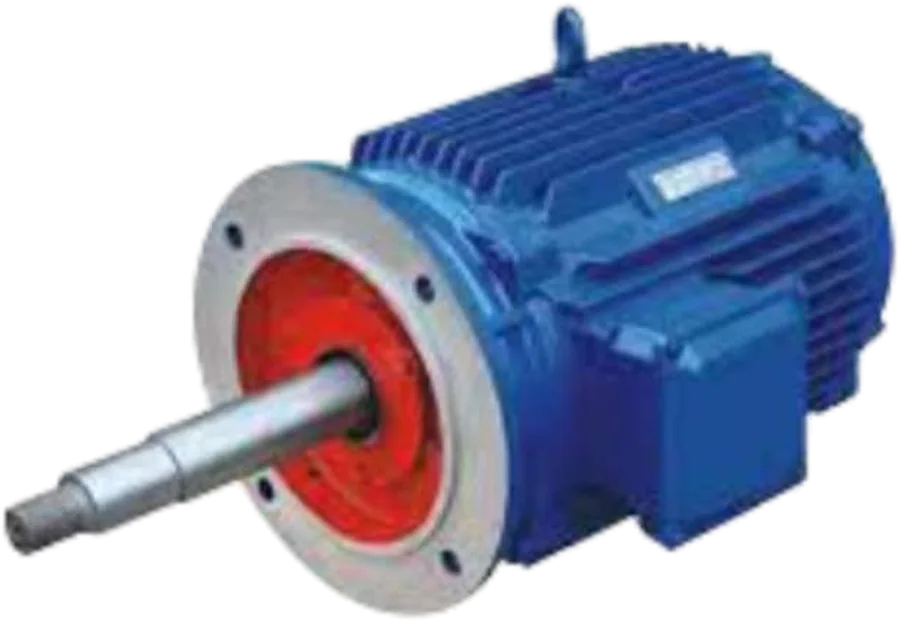
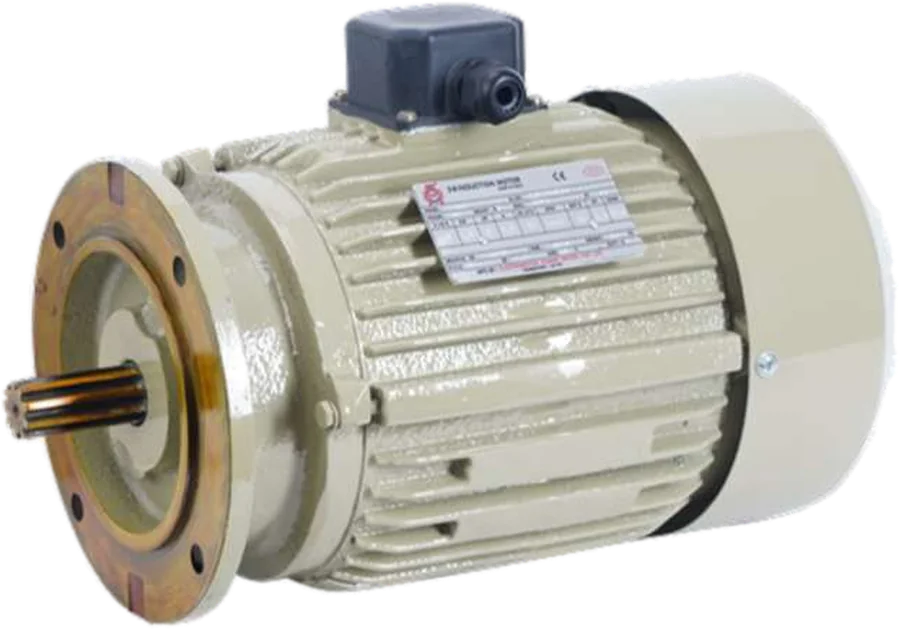
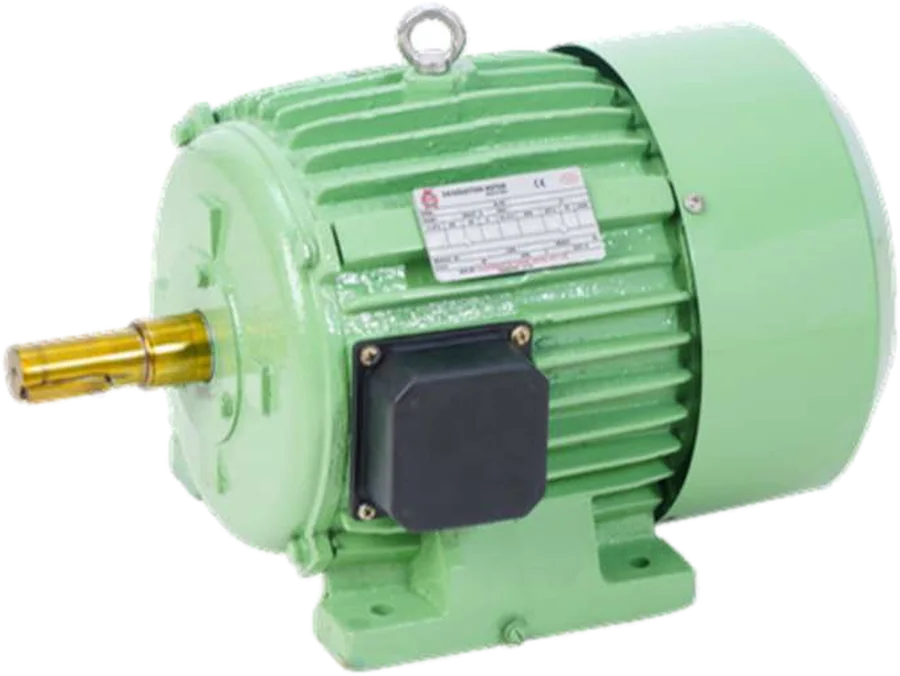
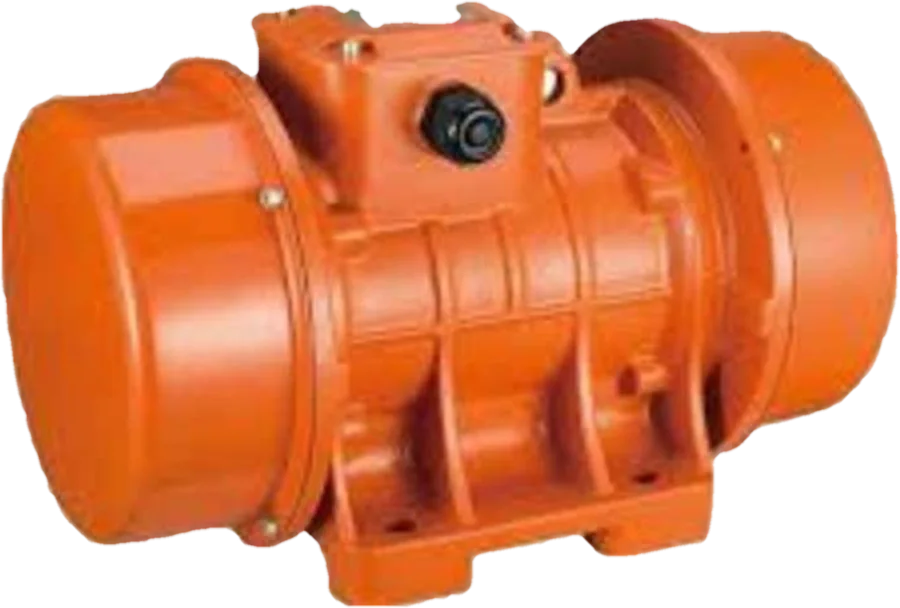
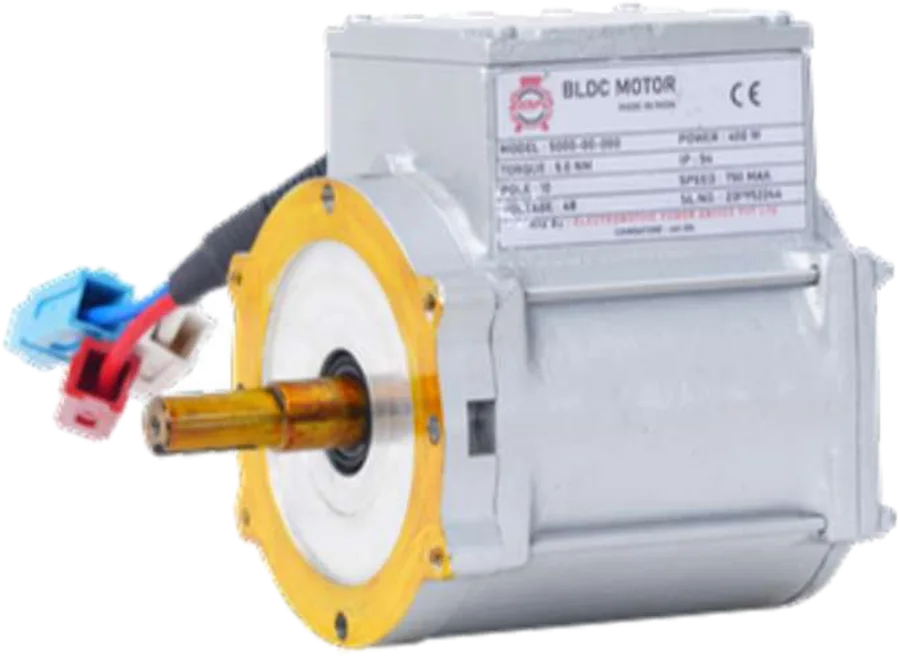
Motors for North America are usually specified at 460 V, 60 Hz. Many IEC motors are designed for 400 V, 50 Hz. Because 460 ÷ 60 = 7.67 V/Hz is within 5 % of 400 ÷ 50 = 8 V/Hz, the magnetic flux in the machine stays almost the same, and the motor behaves predictably.
Speed rises by 20 %
Synchronous speed is proportional to frequency: a 4-pole motor goes from 1,500 to 1,800 rpm. With slip about the same, a 1,450 rpm motor runs at about 1,740 rpm.
Output rises, torque stays about the same
Power is torque times speed. At the same torque and 20 % more speed the motor could deliver 20 % more power, but flux is about 4 % lower at 460 V 60 Hz, so EMPD rates output at × 1.15, a conservative figure confirmed by test on every 60 Hz order.
Nameplate HP is a standard size
North American buyers expect standard horsepower ratings. EMPD nameplates the next standard size at or below the calculated value: 11.57 HP becomes 10 HP. The difference is not wasted. With a service factor of 1.25, the motor carries 12.5 HP continuously.
Current: quote it at nameplate HP
A common mistake is to print the current at the calculated output next to the smaller nameplate HP. EMPD scales the active part of the current to the nameplate load and keeps the magnetising part, so the FLA on the datasheet matches the HP printed beside it.
What does not change
- Frame, mounting and shaft (IEC metric unless NEMA frames are ordered).
- Spring-applied brake torque, which does not depend on frequency.
- Insulation class F with class B rise.
See every rating in the motor finder at 460 V 60 Hz, or convert your own motor with the 50 → 60 Hz tool.